
The so-called ‘Black and White Villages’ of the Welsh Marches, the border landscape between England and Wales, are settlements containing gorgeous timber-framed houses in close clusters: dark oak beams set against pale panels, with rooflines that lean and settle in ways that make it clear these buildings have been standing for centuries.
The effect is sometimes described as ‘black and white’, but it is really the visible structure of a building method – oak frames, infill, later repairs – repeated across a region that had both the materials and the local wealth to build in this way.
These villages work well for slow, summer travel. In June, daylight lasts into the evening, lanes are bright with hedgerow greens, and it’s easy to link several stops without rushing. The pleasure is in the details: jettied upper floors, carved brackets, uneven windows, old market spaces, and churches that are often older than the houses around them. What follows is a profile of eight villages that make a strong introduction to the area, each with a slightly different feel.
Weobley
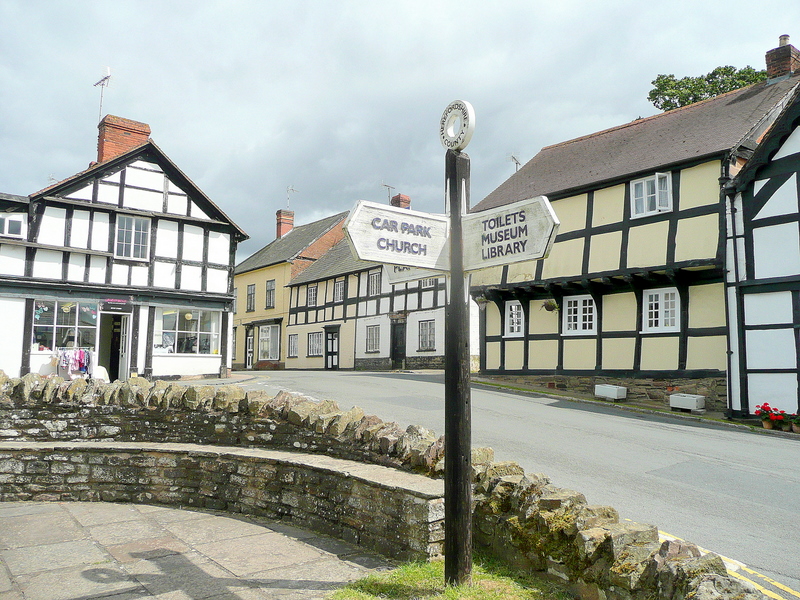
Weobley is often treated as a natural hike starting point because it has a clear centre and a good concentration of timber-framed buildings. The main streets are compact enough to walk comfortably, but varied enough that you keep noticing differences: framing patterns, later brick infill, and the way some buildings have been adapted over time.
It is the sort of village where you don’t need a strict plan. A short circuit through the centre and the lanes around it is enough to understand why Weobley appears so frequently in lists of black-and-white highlights.
There is also a strong sense of Weobley as a working place rather than a “set”. Shops and everyday services matter here because they keep the village from feeling like a single-purpose heritage stop. If you want a straightforward pub pause in the centre, Ye Olde Salutation Inn is one of the tradition.
Pembridge
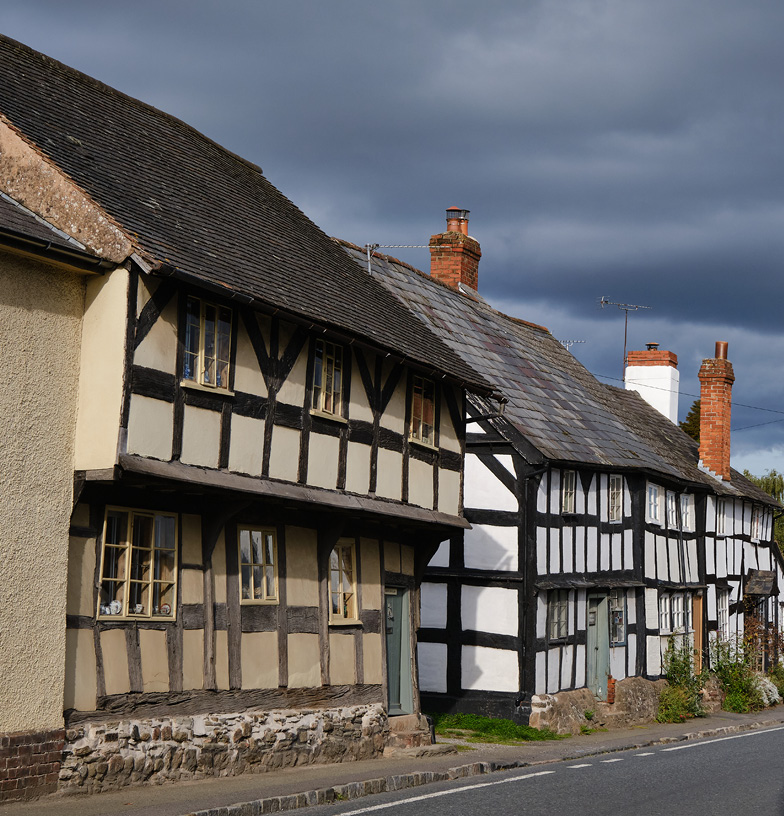
Pembridge feels like a place that grew around trade. The streets have a settled look, and there is an obvious focal point in the Market Place: the Market Hall, usually dated to the 16th century, which gives Pembridge a clear “this is the centre” moment. It also makes the village easy to read at a glance – stand by the Market Hall, look up and down the street, and the timber framing does the rest.
Pembridge is also known for its church: St Mary’s stands above the village and is notable for its detached bell tower, which is an unusual and memorable feature even if you are not actively collecting churches.
The village sits close to the River Arrow, and a short walk towards the water is a good way to break up a visit and see how closely the settlement is tied to its landscape.
For a pub stop that matches the setting, The New Inn stands right by the Market Hall. It’s a convenient place to pause if you are moving between villages, and its position in the centre makes it an easy reference point.
Eardisland
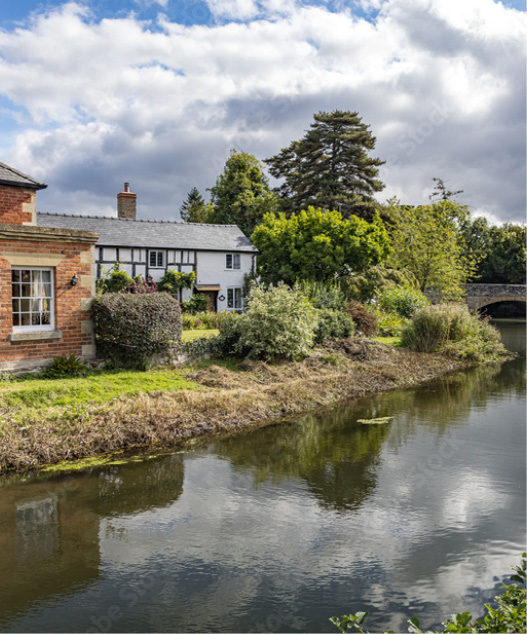
Eardisland is a smaller village, but the setting makes it stand out. It sits on the River Arrow, and the river and bridge give you a natural spine for a short walk. It has a nice combination of timber-framed houses and water rather than for one headline building. The river softens the village scene and provides a quiet place to stop for a few minutes.
Eardisland has character due to its historic houses close to the water, and a general sense that the village developed in step with the river crossing. If you want a traditional village pub here, The Cross Inn is the best-known option and makes a sensible lunch or early-evening stop.
Dilwyn
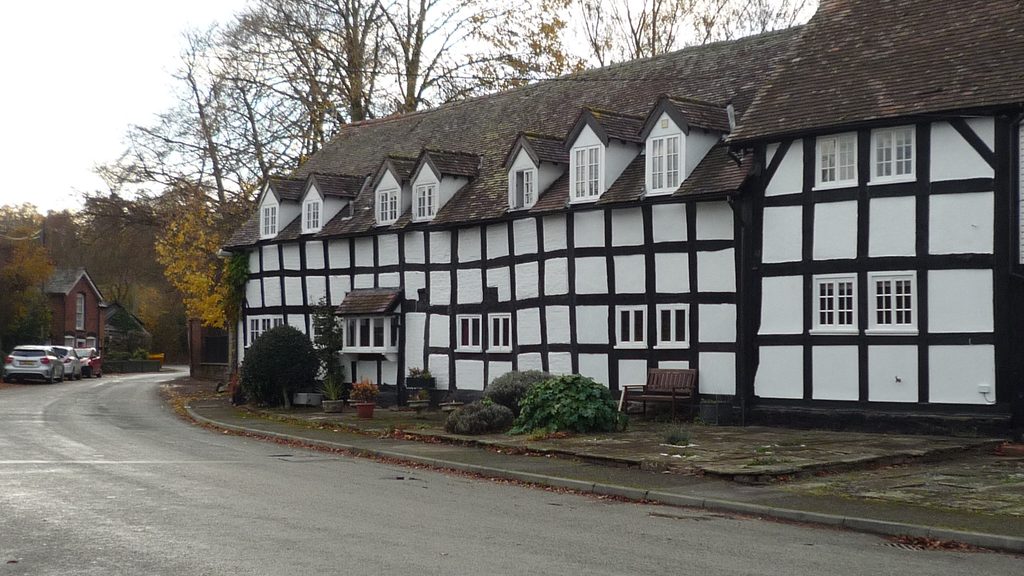
Dilwyn is a useful counterpoint to the more instantly scenic villages. It sits in a wooded hollow and tends to feel quieter, with its centre organised around a green and church rather than a single street of showpiece buildings. That doesn’t mean there is nothing to see – there is timber framing and a strong sense of age – but the appeal is more about atmosphere and layout.
Dilwyn’s church, St Mary’s, has early origins, and village features such as older barns and long-standing property boundaries help show how a small settlement holds onto its shape over time. This is a good place to notice the less obvious side of the black-and-white theme: not only the photogenic façades, but the slower pattern of parish life and rural continuity.
Eardisley
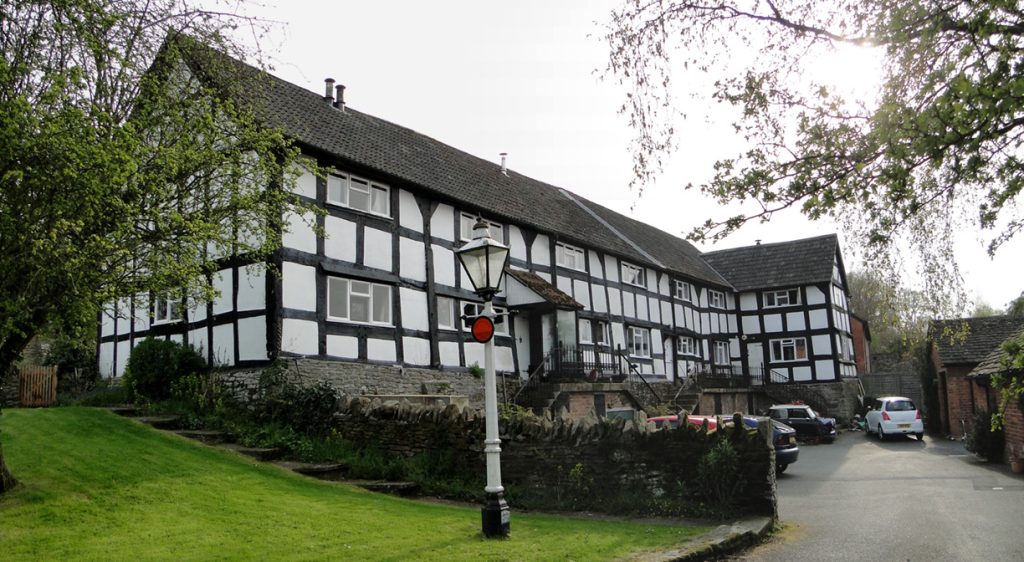
Eardisley is another village where the black and white element is part of the story rather than the whole of it. It sits on a useful route through the area and has a village centre that makes sense as a local hub.
The church is often the main point of interest, particularly because Herefordshire churches can contain surprisingly rich medieval carving and fittings. Even a brief look inside can add variety to a day that might otherwise be all streets and façades.
Eardisley also offers a useful change of pace between the smaller villages. It feels like a place people still use as a local centre, which helps balance the itinerary and keeps the day from becoming a sequence of similar-looking stops.
Kingsland
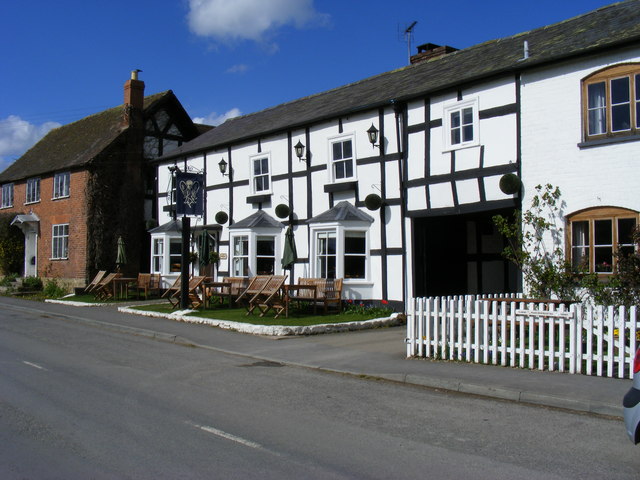
Kingsland is arranged around a broad green, which gives it an open, communal feel. Villages built around greens are common in England and make you immediately understand the shape of the place: a shared centre, roads branching out, houses framing the space. Kingsland also has a reputation for being comfortable to pause in, with familiar village services and a couple of established pubs.
If you want a dependable stop, The Corners Inn or the pictured Angel Inn pubs in Kingsland suit a summer day in the Marches.
Lyonshall
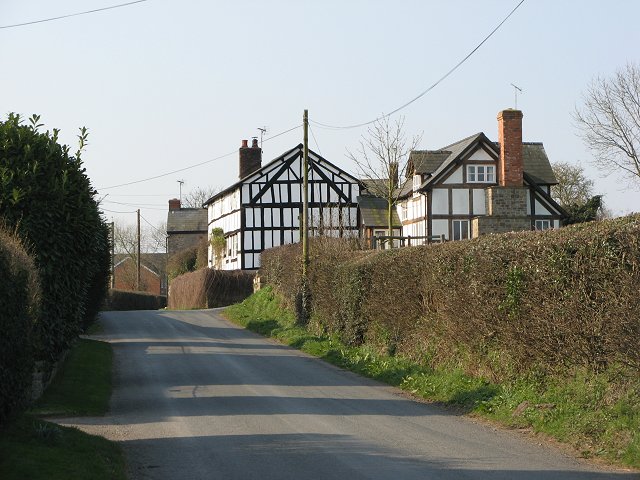
Lyonshall brings in a stronger sense of border-country topography. The village sits on higher ground, and the combination of church, older settlement pattern, and nearby castle remains gives it a slightly more frontier feel than some of the gentler villages. It is also one of the places where you can see how the Marches landscape shapes settlement: hills, ridges, and lines of sight matter more than in flatter counties.
Lyonshall is not a large village, and it doesn’t need a long visit. Its value is in variety – an upland note among the river villages and market-centred places – and in the way it points to the Marches’ long history as a zone of defence and control.
Leominster
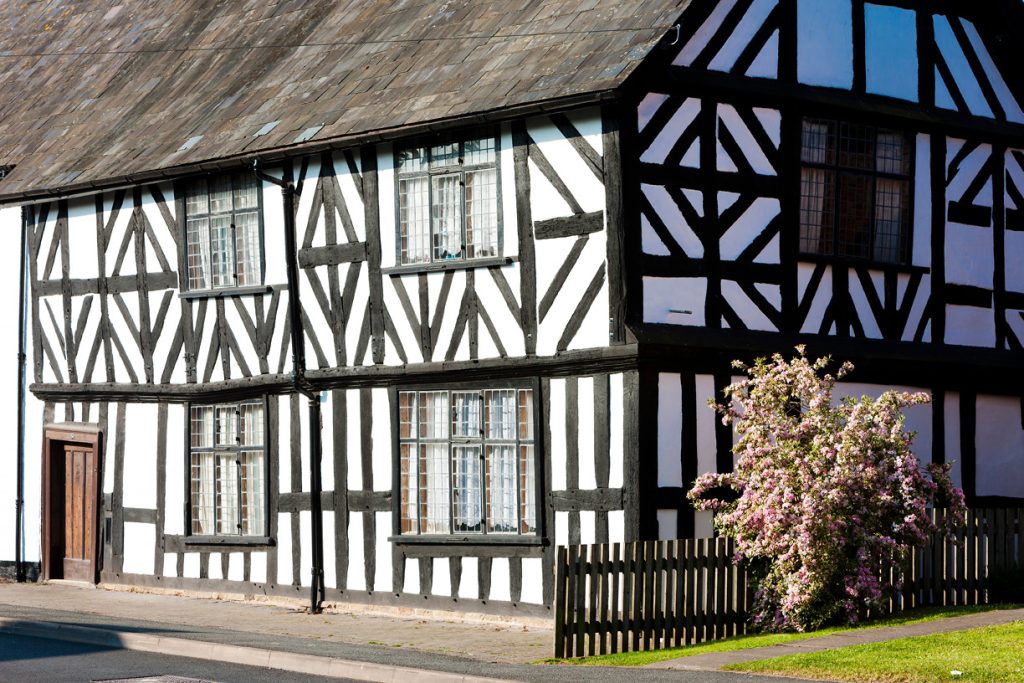
Even though the ‘black and white villages’ label is usually applied to smaller places, Leominster is worth including as a practical anchor town. It is larger than the villages listed above and has the sort of services that make travel easier – more accommodation options, more places to eat, and a sense of being a local centre. It also has its own historic character, including a priory church and an older town layout, which fits the wide