
The Jurassic Coast is one of the most distinctive stretches of coastline in England. Running for about 95 miles through Dorset and East Devon, it is famous for its cliffs, fossils, sea arches, beaches and handsome old towns. It is also a UNESCO World Heritage Site, recognised for rocks and landforms that tell a story stretching back around 185 million years.
For visitors, though, the appeal is not only geological. This is a coast of gentle seaside towns, dramatic walks, harbour views, old pubs, fossil shops and places where the landscape seems to change every few miles.
Here are some of the best places to include on a trip.
Lyme Regis
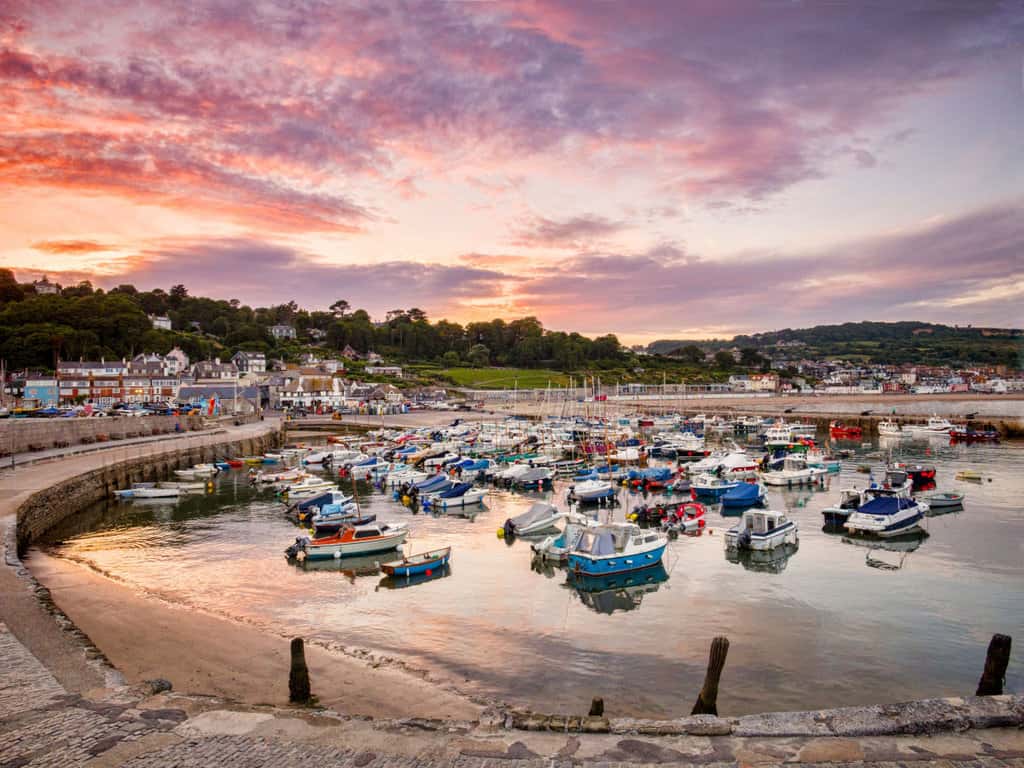
Lyme Regis is one of the classic towns of the Jurassic Coast, and a good place to begin. It has an attractive seafront, a small harbour, independent shops and a long association with fossil hunting.
The town is closely linked with Mary Anning, the pioneering fossil collector who made several important discoveries here in the early 19th century. The beach and cliffs around Lyme Regis are still known for fossils, though sensible caution is needed near unstable cliffs. The town itself is very pleasant for a slower visit.
The Cobb, the curving harbour wall, is its best-known landmark and appears in both Jane Austen’s ‘Persuasion’ and John Fowles’ ‘The French Lieutenant’s Woman’. It is a fine place for a stroll, especially in good weather.
Charmouth
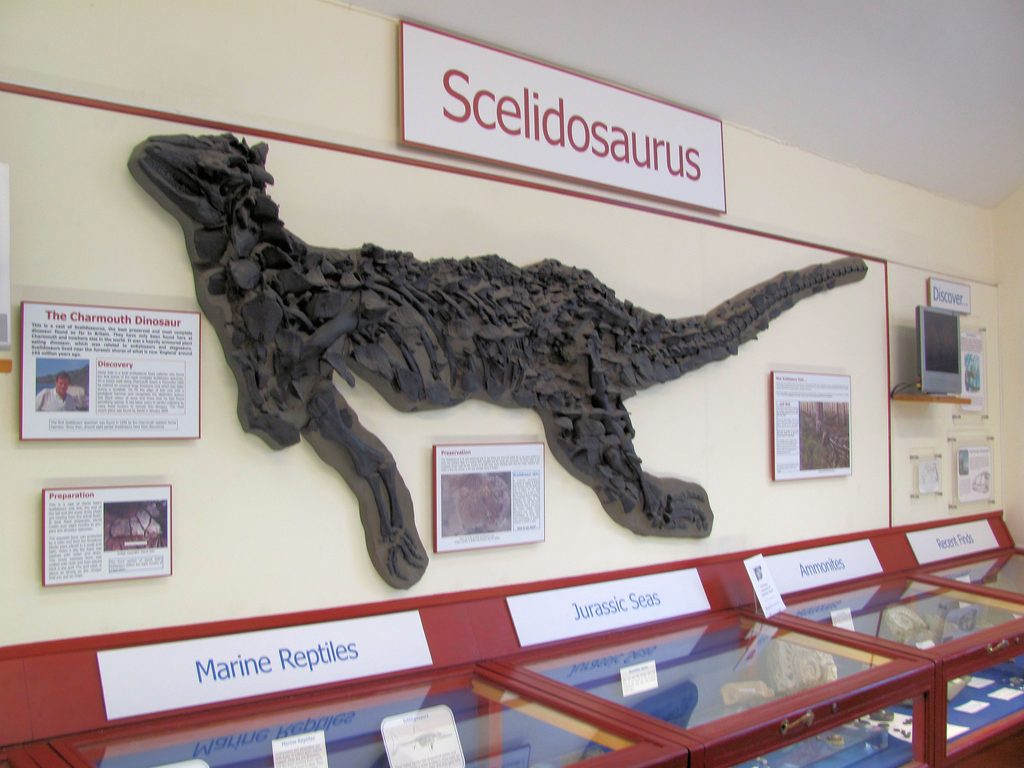
Just along the coast from Lyme Regis, Charmouth is one of the best places for anyone interested in fossils.
The beach is backed by cliffs that regularly reveal ammonites and other remains from the ancient seas that once covered the area. The Charmouth Heritage Coast Centre is a useful first stop, particularly for visitors who want to understand what they are looking at before walking on the beach.
Guided fossil walks are often available, and they are a good idea if this is your first time fossil hunting.
Charmouth has a quieter feel than Lyme Regis, making it a good choice for those who prefer a more relaxed village base.
West Bay & Bridport
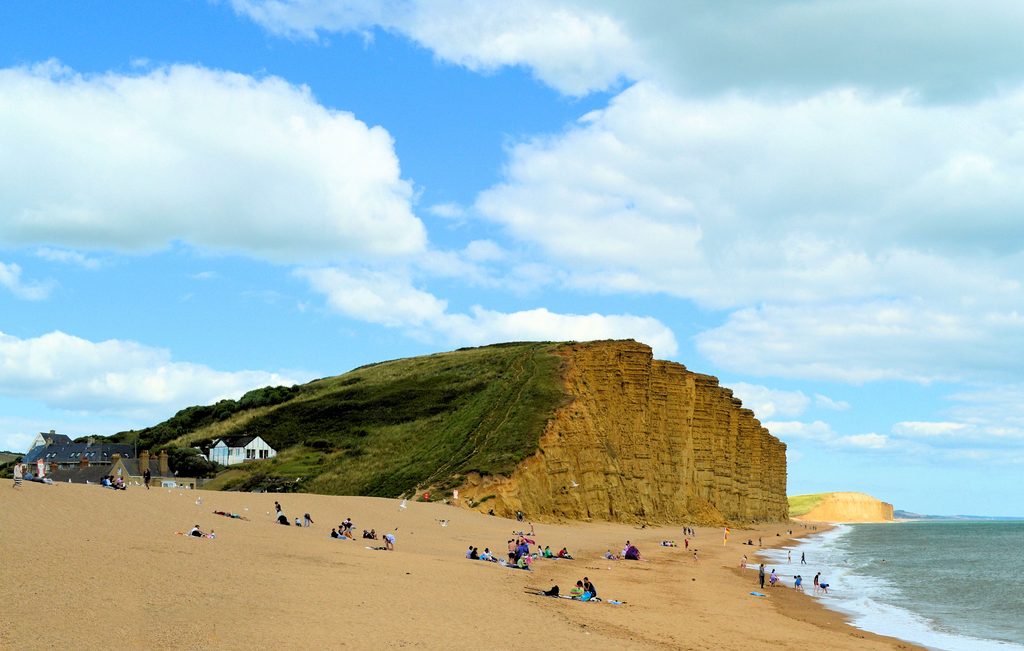
West Bay is the small harbour settlement just south of Bridport, and its towering golden cliffs are among the most recognisable sights on this part of the coast. They were also used as a filming location for the television series ‘Broadchurch’, which brought the area to a wider audience.
The harbour has a working, practical character, with fishing boats, seafood stalls and views along the beach. Bridport, a short distance inland, is a lively market town with a strong arts and food scene. Together, West Bay and Bridport make a good pairing: coast and town, cliffs and cafés, sea air and a little local browsing.
Chesil Beach & Abbotsbury
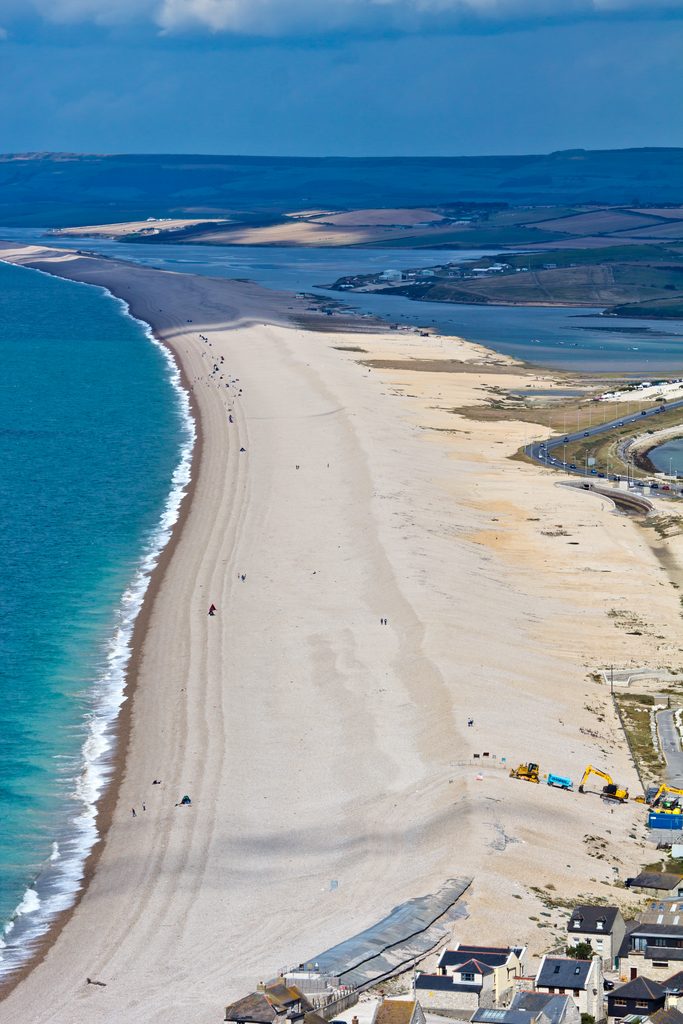
Chesil Beach is quite unlike most English beaches. It is a long shingle barrier beach, stretching for many miles, with the Fleet Lagoon behind it. It is impressive rather than conventionally pretty, and its scale is part of the attraction.
One of the best places to appreciate it is from Abbotsbury, a historic village with stone cottages, a famous swannery and subtropical gardens nearby. The beach itself can be hard going underfoot, so it is often better admired than walked for long distances. Even so, the view is memorable, especially on a clear day when the line of shingle seems to run on almost without end.
Lulworth Cove and Durdle Door
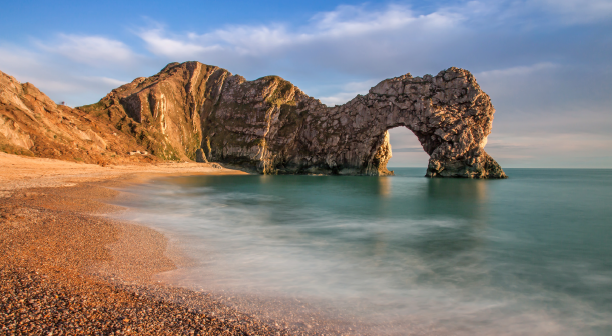
Lulworth Cove and Durdle Door are among the best-known places on the Jurassic Coast, and for good reason. Lulworth Cove is a near-circular bay formed by the sea breaking through layers of rock, while Durdle Door is a natural limestone arch standing just along the coast.
The walk between them is popular, though it includes hills and uneven p