
London’s eight Royal Parks are a network of green spaces that together cover over 5,000 acres across the city.
Unlike municipal parks, they were originally owned by the Crown and reserved for royal use—often as hunting grounds, private gardens, or ceremonial landscapes. Over time, these parks were gradually opened to the public, and today they are managed by The Royal Parks charity on behalf of the nation.
They are free to enter and open year-round, though some facilities, such as cafés, boating lakes, or gardens, have seasonal hours. They are accessible by public transport and often linked to walking and cycling routes.
Here’s our guide to each of them.
Hyde Park
Location: Central London, adjacent to Kensington Gardens (350 acres)
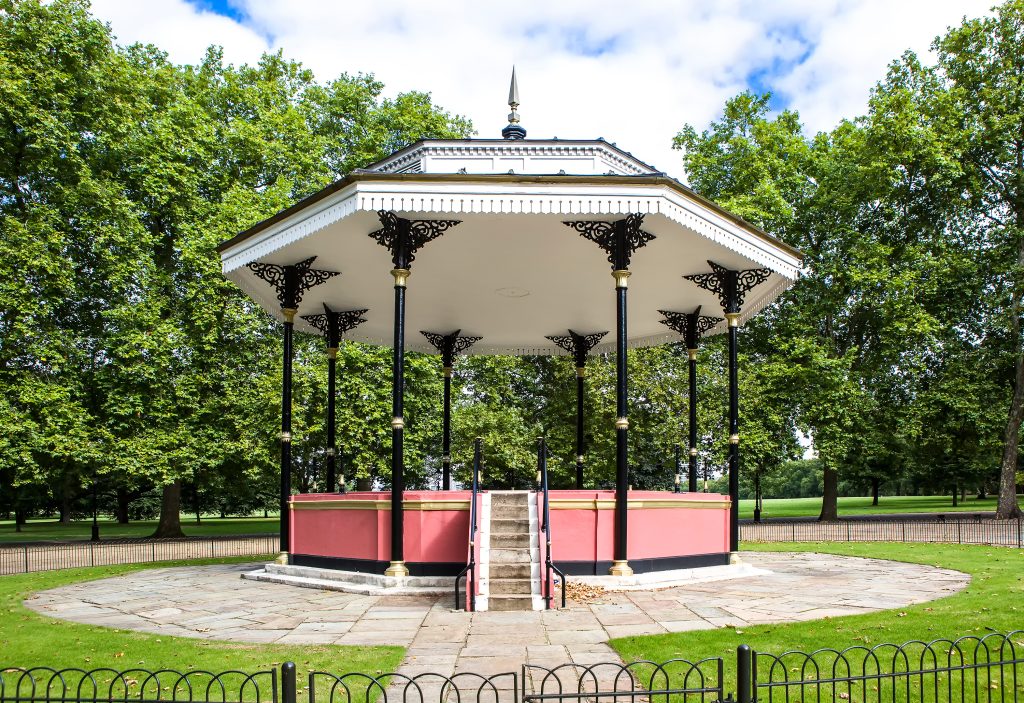
Probably the most famous of the Royal Parks, Hyde Park in central London dates back to 1536, when King Henry VIII acquired the land from Westminster Abbey for use as a private hunting ground. It was finally opened to the general public by Charles I in 1637 and has since become one of the city’s most beloved and iconic green spaces.
A central feature is the large artificial Serpentine lake, created in the 1730s where visitors can enjoy boating or open-water swimming at the Serpentine Lido during the warmer months.
Key landmarks and attractions within the park include:
- Speakers’ Corner: Located in the northeast corner near Marble Arch, this is a world-famous symbol of free speech where public debates and orations have taken place since 1872.
- Diana, Princess of Wales Memorial Fountain: A unique, circular granite water feature designed to reflect the Princess’s inclusive personality.
- Rotten Row: Historically a fashionable horse-riding track, its name is believed to be a corruption of the French “Route du Roi” or King’s Road, which was the first lamp-lit highway in London.
- The Rose Garden: A beautiful, formal garden near Hyde Park Corner.
- Memorials: The park also houses Britain’s Holocaust Memorial and the 7 July Memorial, commemorating the victims of the 2005 London bombings
Kensington Gardens
Location: West of Hyde Park, bordering Kensington Palace (265 acres).
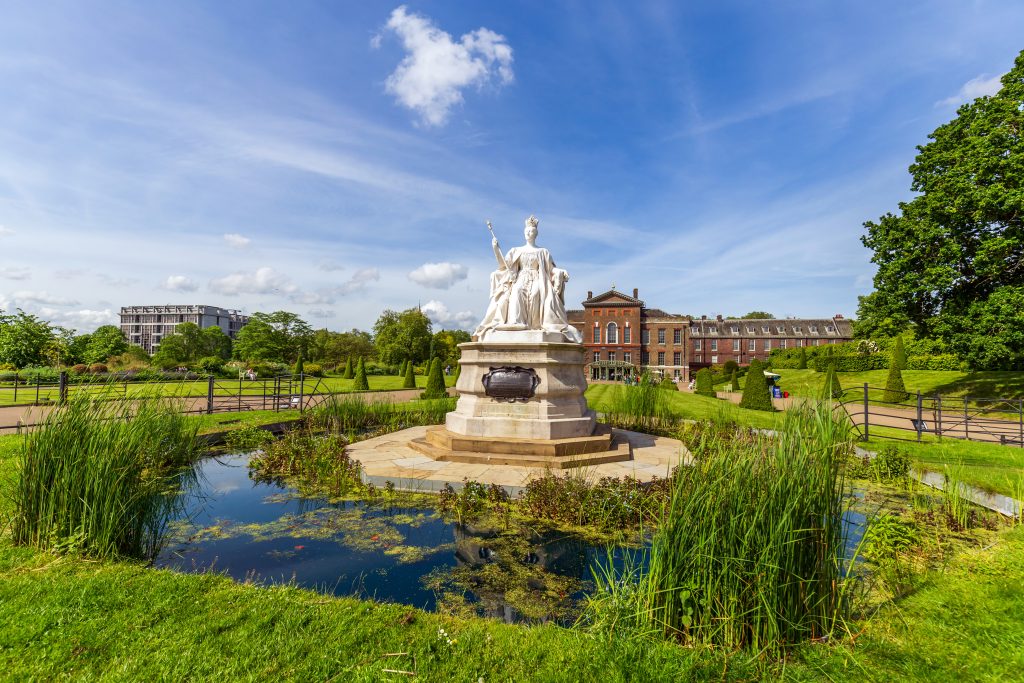
Originally part of Hyde Park, Kensington Gardens was separated in 1728 at the request of Queen Caroline, wife of George II. It was landscaped in the formal style of the time, with avenues, ornamental water features, and a more controlled layout than its larger neighbour.
The park contains Kensington Palace, a working royal residence, along with the Italian Gardens, a 19th-century ornamental water garden; the Albert Memorial, commemorating Prince Albert; and the Serpentine Gallery, a contemporary art venue.
Its character is quieter and more formal than Hyde Park, with a blend of open lawns and tree-shaded walks.
St James’s Park
Location: Between Buckingham Palace and Whitehall, central London (57 acres)

St James’s Park is the oldest of the Royal Parks, established as a deer park by Henry VIII in 1532.
It underwent a major redesign in the 17th century under Charles II, who introduced formal landscaping in the French style. In the early 19th century, John Nash remodelled the park into its current informal layout, with winding paths and an ornamental lake.
The park is notable for its views: one axis looks towards Buckingham Palace, another towards Horse Guards Parade.
The lake supports a colony of pelicans, a gift from Russia in the 17th century, and its bridges offer some of the city’s most recognisable vistas.
Green Park
Location: Between St James’s Park and Hyde Park, central London (40 acres)

Green Park was enclosed by Charles II in 1668 and was once used for royal duels and fireworks displays.
It is unique among the central Royal Parks in having no formal flowerbeds, statues, or buildings and its open grassy slopes and mature plane trees give it a simple, uncluttered appearance.
The park is bordered by Constitution Hill, Piccadilly, and the Mall, placing it between some of London’s busiest areas while remaining a relatively quiet space. It is often used as a walking route between Buckingham Palace and Piccadilly.
Regent’s Park
Location: North-west of central London, incl Camden and Westminster (395 acres, plus Primrose Hill).
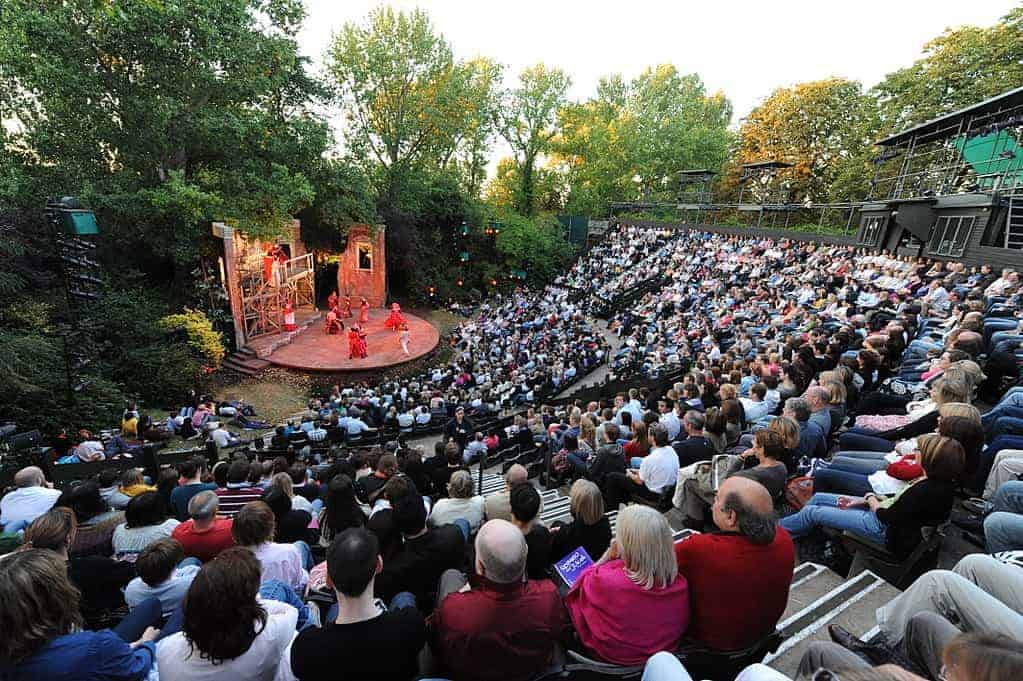
Regent’s Park was designed in the early 19th century by John Nash as part of a grand scheme for a royal residence, which was never built.
The park retains much of his layout, with a mix of open parkland, ornamental gardens, and a boating lake.
Within its boundaries is the Inner Circle, home to Queen Mary’s Gardens, which contains over 12,000 rose varieties.
The northern edge houses the London Zoo, founded in 1828, and Primrose Hill, just to the north, offers a clear panoramic view of the city.
Regent’s Park is also a venue for outdoor sports, with pitches and facilities in the northern fields, and it famous open air summer theatre.
Richmond Park
Location: South-west London, in the borough of Richmond upon Thames (2,500 acres)
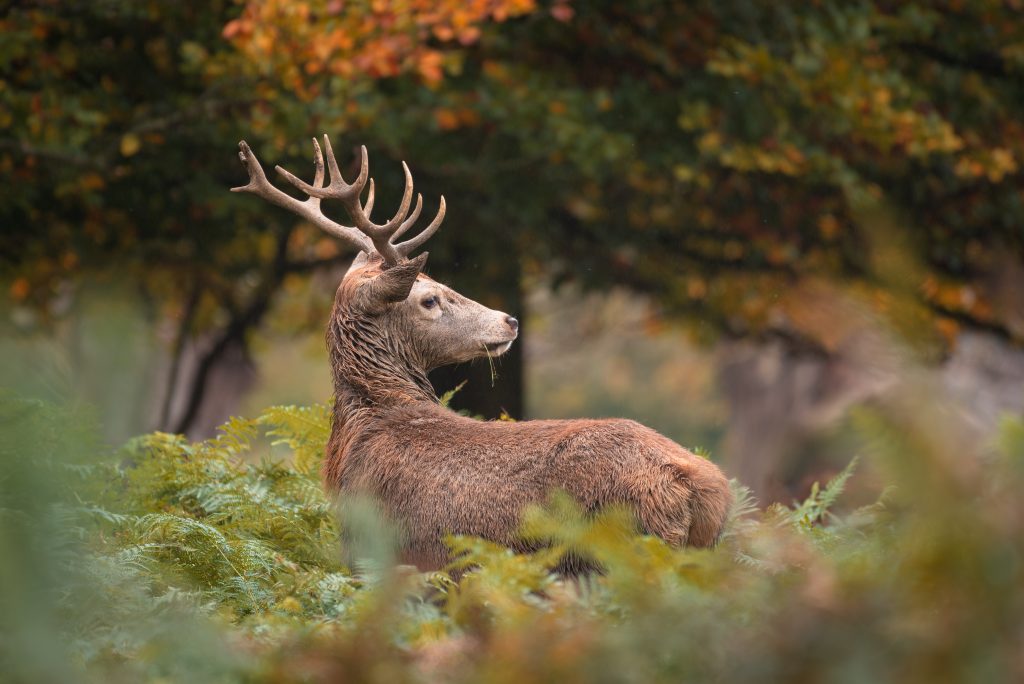
Richmond Park is the largest of the Royal Parks, created by Charles I in the 1630s as a deer park. It remains home to herds of red and fallow deer, which roam freely across its wide grasslands and wooded areas. The park has a largely naturalistic landscape, with ancient oak trees, ponds, and rolling hills.
Notable sites include the Isabella Plantation, a woodland garden with seasonal flowering shrubs; King Henry’s Mound, offering a protected view of St Paul’s Cathedral; and Pembroke Lodge, a Georgian mansion now used as a public café and event space.
Its scale and ecology make it a designated National Nature Reserve.
Bushy Park
Location: Near Hampton Court Palace, south-west London (1,100 acres)

Bushy Park lies to the north of Hampton Court and was historically linked to the palace’s hunting grounds. It has been a royal deer park since the reign of Henry VIII, and today herds of red and fallow deer remain a key feature.
The park contains a mixture of grassland, woodland, and waterways, including the Longford River, an artificial watercourse built to supply Hampton Court’s fountains and gardens.
The Diana Fountain, a 17th-century statue (of the Roman goddess, not the Princess) at the centre of a large round pond, is a central landmark. The park also has areas of formal planting near Hampton Court Gate and supports a variety of wildlife.
Greenwich Park
Location: South-east London, overlooking the River Thames (183 acres)
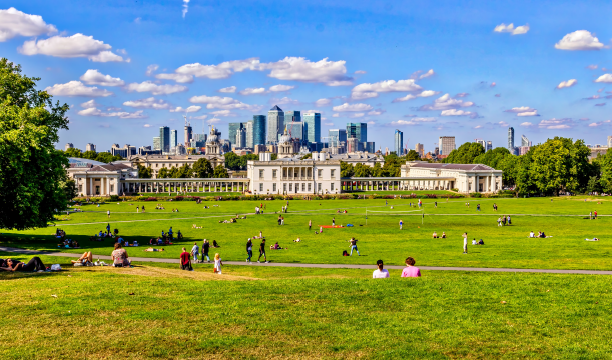
Greenwich Park is the oldest enclosed Royal Park, dating from 1427. It was landscaped in the 17th century by André Le Nôtre, who created the grand tree-lined avenues still visible today. The park occupies a hillside, with the lower slopes running down to the Thames and the upper areas offering wide views across the city.
Within the park are the Royal Observatory, the Prime Meridian line, and the National Maritime Museum. Its mix of formal gardens, deer enclosure, and open lawns reflects both its historical and scientific significance.
The park forms part of the Greenwich UNESCO World Heritage Site.