
Stonehenge sits on a flat, open plain in Wiltshire, England – a circle of massive prehistoric stones that has drawn visitors, scholars, and worshippers for centuries. Few ancient sites have inspired as much research, debate, and fascination, and the monument continues to resist easy explanation.
A Monument Five Thousand Years in the Making
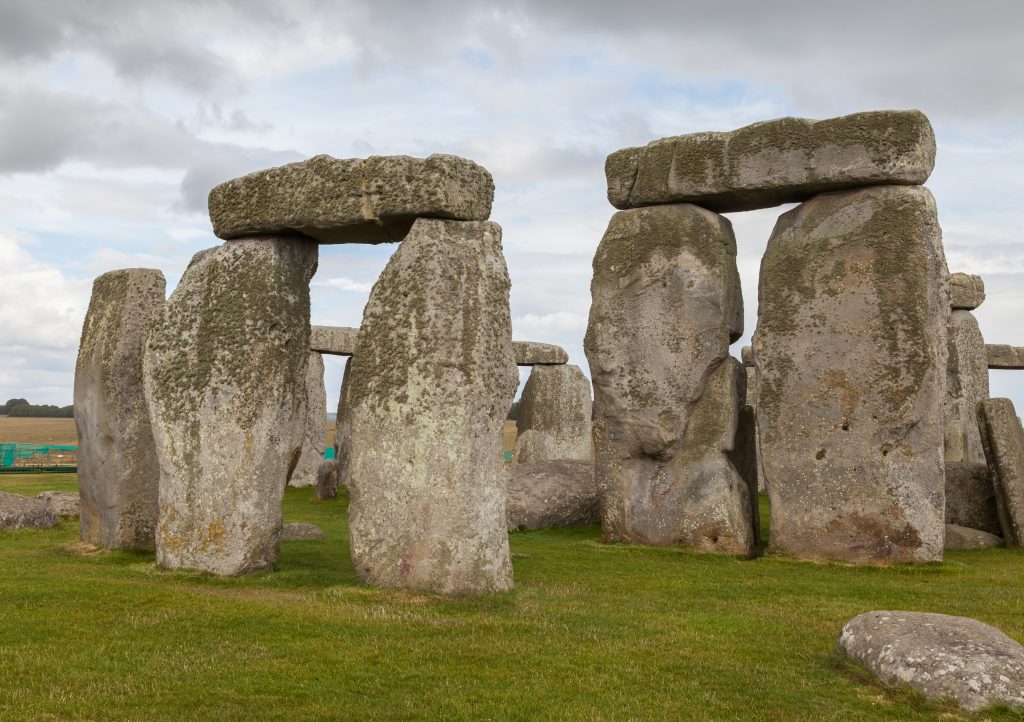
Stonehenge was not built in a single phase, but developed across roughly 1,500 years, beginning around 3000 BC — pre-dating the pyramids of Giza and the Bronze Age in Britain. The earliest phase was a simple circular earthwork: a ditch and bank that appears to have served, at least in part, as a burial ground.
Cremated remains found at the site date back to this period, making Stonehenge one of the oldest cemeteries in the British Isles. The iconic standing stones came later, in several distinct phases.
Around 2500 BC, enormous sarsen stones, a type of silicified sandstone, were transported from Marlborough Downs, some 25 miles to the north. The largest weighs roughly 25 tonnes and stands nearly 30 feet tall. A second set of smaller “bluestones” was also incorporated, quarried in the Preseli Hills of west Wales, more than 150 miles away.
How Was It Built?
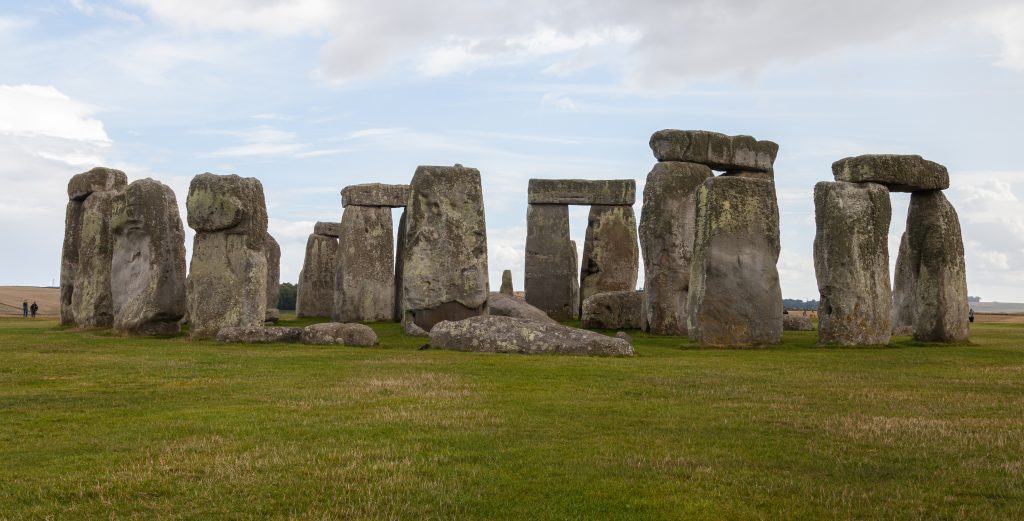
The methods used to build Stonehenge are not fully understood, but archaeological research has produced a number of credible theories. The sarsen stones were likely transported using wooden sledges pulled by large teams of people, along routes that may have been greased with animal fat.
Experiments have shown that a large stone on a sledge over timber rollers can be moved by 100 to 200 people — physically demanding work, but achievable with sufficient organisation.
The bluestones present a more complex problem. For many years it was assumed they were moved entirely overland from Wales, but more recent research has proposed that glacial action during the last Ice Age may have carried some of the stones part of the way, reducing the effort required of Neolithic builders. The theory remains under debate.
Once on site, the stones were shaped using stone hammers — thousands of which have been found nearby — and fitted with mortise-and-tenon joints before being raised into position using earthen ramps and timber levers.
The structure also shows careful alignment with sun movements, indicating that its builders had a working knowledge of astronomy.
What Was It For?
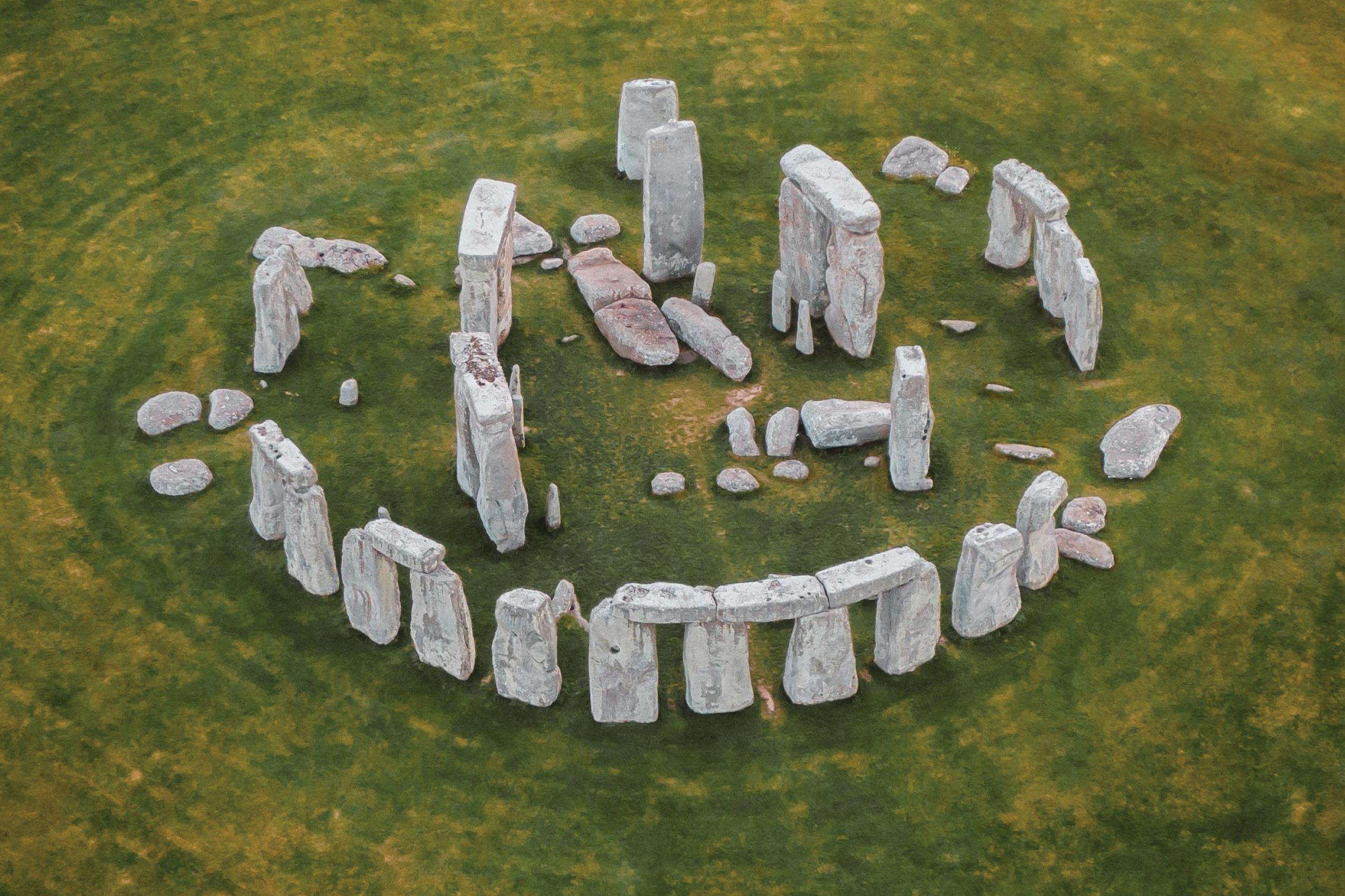
The purpose of Stonehenge is not definitively known, and it likely served different functions at different points in its long history.
The solar alignment is one of the most studied features: at the summer solstice, the rising sun shines directly through the monument’s main axis, framed by the outlying Heel Stone.
At the winter solstice, the setting sun aligns in the opposite direction. These alignments are widely considered to have been intentional, suggesting the monument was used to mark significant points in the annual calendar.
The quantity of human remains found at the site — over 50,000 bone fragments representing at least 64 individuals — points to Stonehenge having served as a burial ground and a place of ancestor veneration.
Some researchers have proposed it may also have been a site associated with healing, drawing people from across Britain and Europe.
Isotope analysis of skeletal remains confirms that some of those buried here had travelled from considerable distances, including from mainland Europe and possibly the Mediterranean.
Getting There
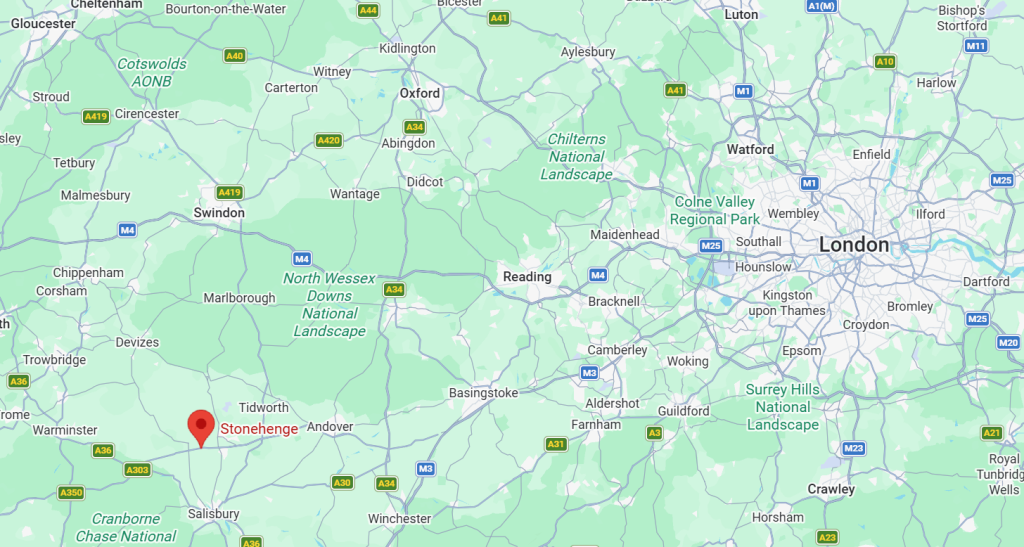
Stonehenge (marked on the map above) is located near the village of Amesbury in Wiltshire, about 90 miles south-west of London and 8 miles north of Salisbury. The site is managed by English Heritage and receives over a million visitors each year.
The most straightforward approach from London is by train to Salisbury, which takes around 90 minutes from London Waterloo. From Salisbury, a dedicated Stonehenge Tour bus runs regularly to the site.
If you are driving, the monument is accessible via the A303 westbound, and is visible from the road.
The visitor centre, opened in 2013, contains a collection of artefacts and provides background on the site’s archaeology before visitors approach the stones. A shuttle runs from the centre to the monument across open grassland.
Advance booking is recommended, particularly in summer.
Modern Usage
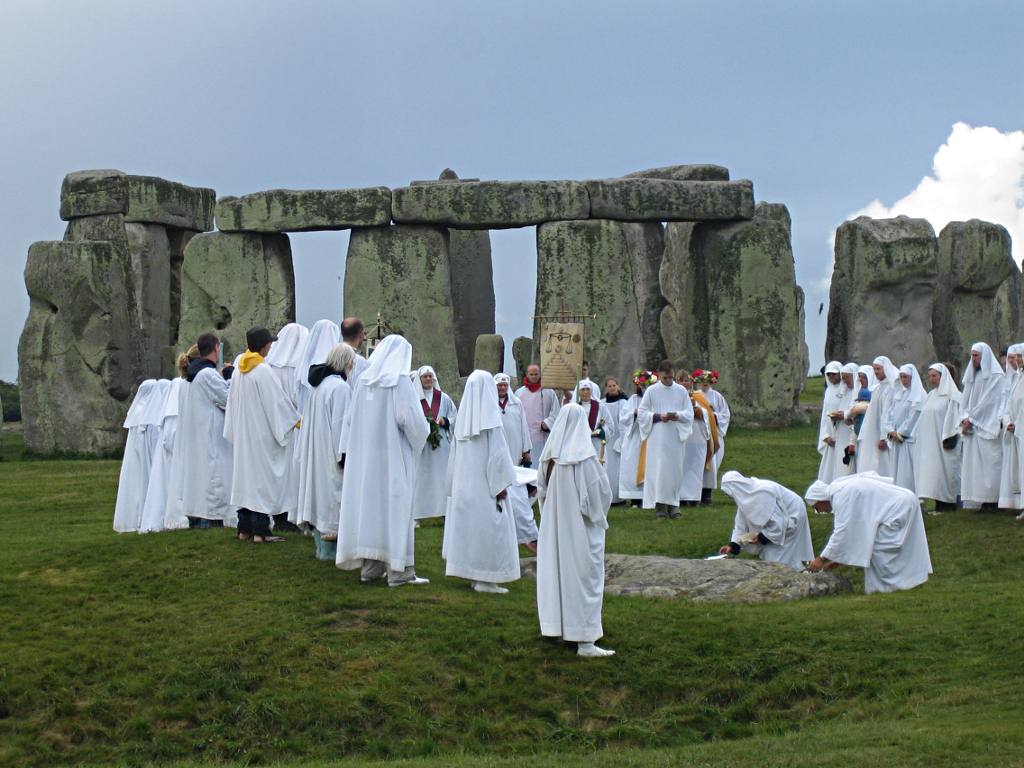
Stonehenge remains a place of active spiritual significance for a number of contemporary communities. Modern Druids and Pagans gather at the site for the solstices and equinoxes throughout the year.
The summer solstice in June draws the largest crowds, with tens of thousands of people attending an all-night vigil to greet the sunrise. English Heritage facilitates “open access” at these events, allowing visitors to walk among the stones — something not permitted during standard visiting hours.
Contemporary Druidry does not have an unbroken historical connection to the Iron Age Celts, and there is no established evidence linking modern Druid practice to Stonehenge’s original builders. The solstice gatherings are nonetheless well-attended and peaceful, and reflect the site’s continued resonance as a place of communal and spiritual significance.
Stonehenge is open year-round. Advance booking is strongly recommended. Visit English-heritage.org.uk for tickets and seasonal opening hours.