
The city of Salisbury isn’t 5,000 years old like Stonehenge, but is still a pretty historic place, originating at the Iron Age hillfort of Old Sarum. Occupied by Romans, Saxons, and Normans, the settlement featured a royal castle and the first cathedral. In 1220, due to space constraints and friction between the military and clergy, the community relocated two miles south to the valley.
This new city, initially called New Sarum, grew around the magnificent Salisbury Cathedral, which was largely completed by 1258 and today remains a vibrant market centre, retaining its medieval grid layout.
But the cathedral is the main draw. As well as being a magnificent site in the Salisbury Plain, it’s home to the tallest spire in the UK and one of four original copies of the Magna Carta.
For visitors travelling through Wiltshire, many of whom come primarily for Stonehenge, just nine miles to the north, it is well worth a dedicated visit in its own right.
Brief History
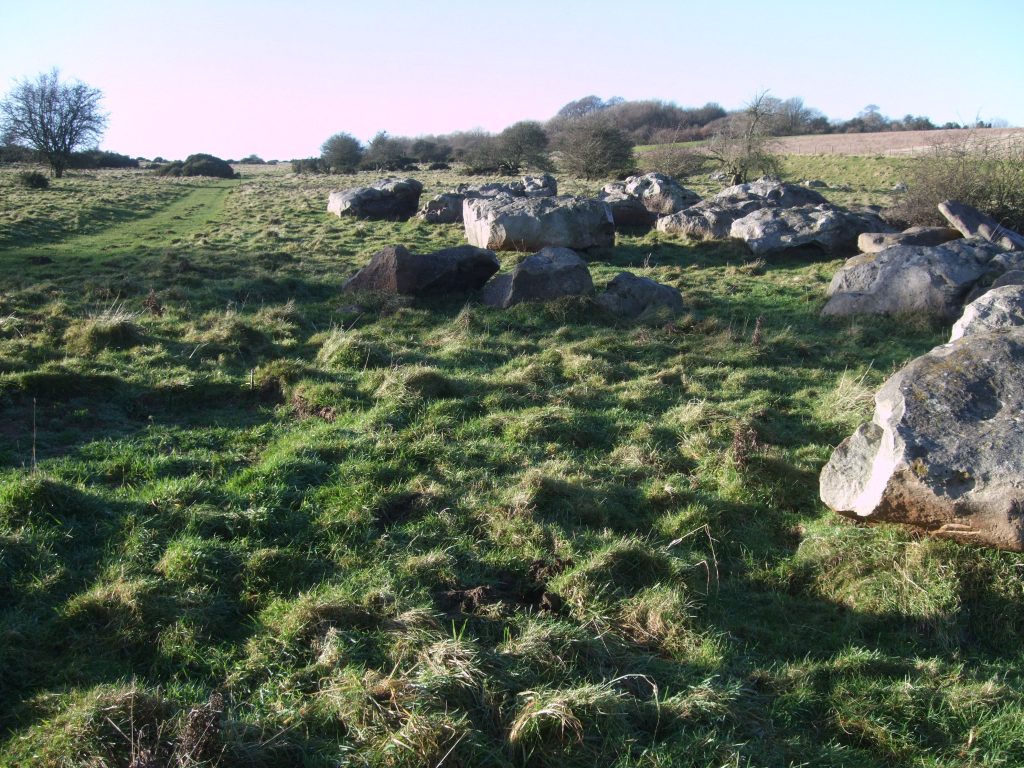
Construction of Salisbury Cathedral began in 1220, on a new site chosen after the original cathedral at nearby Old Sarum was abandoned due to disputes between the clergy and the military garrison who shared the hilltop settlement. The new location, on low-lying ground beside the River Avon, was deliberately chosen for its access to water and its open aspect.
Building progressed relatively quickly by medieval standards, and the main structure was largely complete by 1320 — a span of around a century, which accounts for the cathedral’s unusually consistent Early English Gothic style. Most medieval cathedrals were built over several centuries and show a mixture of architectural periods; Salisbury’s relative stylistic unity is one of its distinguishing features.
The famous spire was added between 1310 and 1330, and at 404 feet it remains the tallest in Britain. It was not part of the original design, and the additional weight — estimated at around 6,400 tonnes — caused the four central pillars to bow noticeably, a visible deflection that can still be seen from inside the nave today. Medieval engineers added reinforcing stone arches and iron tie rods to stabilise the structure, and the spire has remained standing ever since.
The cathedral underwent significant changes in the 18th century, when the architect James Wyatt oversaw a controversial restoration that removed much of the medieval stained glass, demolished three chapels, and cleared the interior of centuries of accumulated monuments and fittings.
Wyatt’s work was later criticised as overly destructive, but it did produce the clean, spacious interior that visitors experience today.
Architecture and Interior
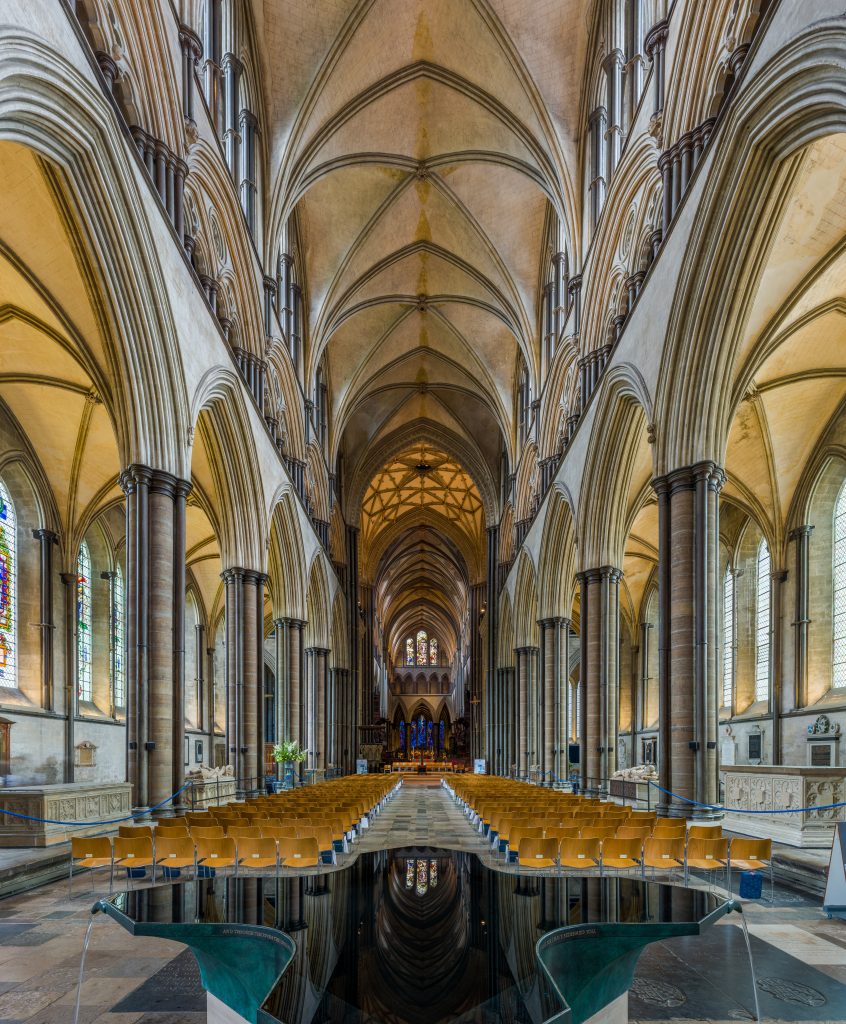
The cathedral is built primarily from Chilmark stone, a creamy limestone quarried from a village about 12 miles to the west, which gives the building its characteristic pale, warm tone.
The nave is 449 feet long, making it one of the longest in England, and the interior has a calm, uncluttered quality that sets it apart from more ornate English cathedrals. The windows in the Trinity Chapel, at the east end of the building, contain some of the oldest surviving stained glass in Britain, dating to around 1220.
The Chapter House, accessed via the cloisters, contains one of the four surviving original copies of Magna Carta, the 1215 charter that established foundational limits on royal power. Salisbury’s copy is considered one of the best preserved of the four, and it is displayed in a purpose-built exhibition space that provides clear historical context for visitors.
The cloisters themselves are the largest of any English cathedral, and are worth time on their own — a quiet, colonnaded square of 13th-century stonework that offers a different perspective on the building’s scale.
The Spire
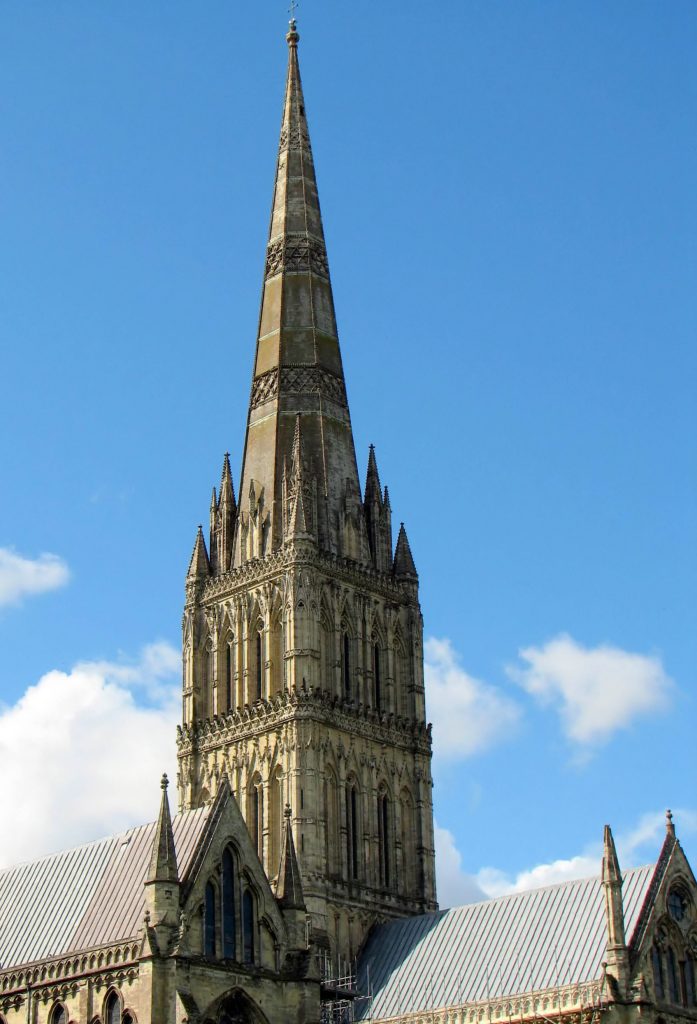
The spire is, for most visitors, the dominant impression of Salisbury Cathedral, and it is visible from a considerable distance across the surrounding Wiltshire countryside.
It features prominently in several paintings by John Constable, who lived nearby in the 1820s and painted the cathedral repeatedly from different vantage points across the water meadows.
The view from those same meadows — the cathedral reflected in the slow-moving River Avon, with open fields in the foreground — remains largely unchanged from Constable’s time, and is one of the more photographed scenes in southern England.
Tower tours are available and take visitors up through the internal structure of the building, including into the roof spaces and up to the base of the spire, offering views across Wiltshire and, on clear days, as far as the Jurassic Coast.
The tours require a degree of physical fitness and involve narrow medieval staircases; they are not suitable for those with limited mobility.
Getting There
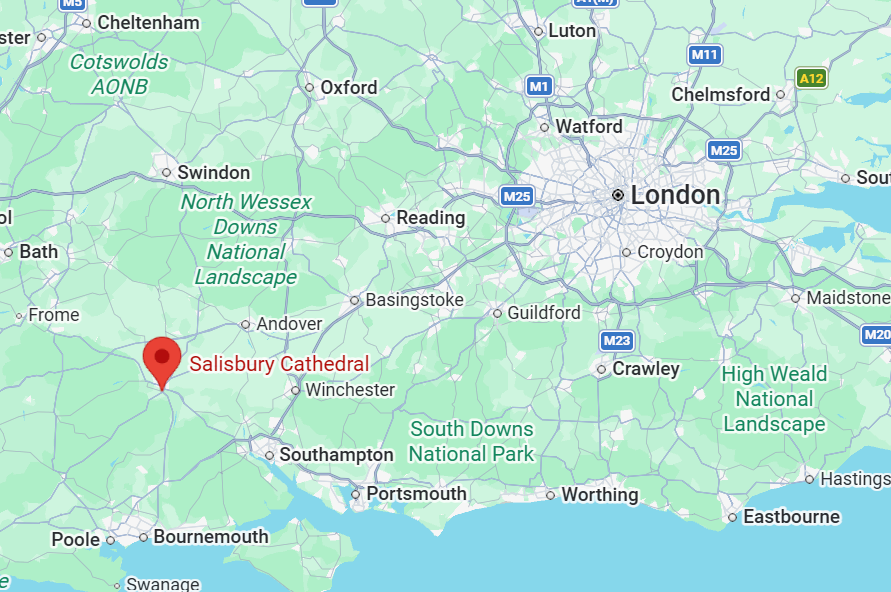
Salisbury is well connected by rail, with regular direct services from London Waterloo taking around 90 minutes. The cathedral is approximately a ten-minute walk from Salisbury railway station, through the city centre.
By road, Salisbury is accessible from the M3 and A303, and is around 90 miles from London. There is no parking at the cathedr